
Reviewed · HISTORICAL TOURS
History of Medicine Tour – by Uncomfortable Oxford™
Medicine is hiding in Oxford’s oldest lanes. This walking tour links plague, anatomy, prostitution, inoculation, imperialism, wartime medicine, penicillin, and the NHS to familiar Oxford places, giving you a wider view than a standard university tour. I like the small group limit of 15 and the way the route connects medical practice with social life and public health.
I also like the discussion-led approach. Guide Devika received especially warm praise for sharing sources and asking thought-provoking questions, not simply reciting dates. The main consideration is pace: eight stops in about 1 hour 45 minutes means some subjects receive a brisk treatment, and this is best for you if you enjoy ideas and conversation more than a long museum visit.
In This Review
- Key points to know before you book
- Why this Oxford tour feels different
- Beneath the Bridge of Sighs: medieval Oxford and disease
- New College and the long shadow of plague
- The Bodleian Library and the early study of anatomy
- The Clarendon Building, prostitution, and public health
- The King’s Arms and Oxford’s pub-based inoculation
- The Natural History Museum and medicine shaped by empire
- St Giles’ Memorial Garden and wartime medical change
- St Luke’s Chapel, penicillin, and the birth of the NHS
- What the guide adds to the experience
- Is $95.98 good value?
- Timing, group size, and practical planning
- Who should book this Oxford walk?
- Should you book the History of Medicine Tour?
- FAQ
- Where does the History of Medicine Tour begin?
- Where does the tour finish?
- How long does the tour last?
- What language is the tour offered in?
- How many people can join the tour?
- What is included in the tour price?
- Are admission tickets included?
- Can I cancel for a full refund?
Key points to know before you book
- Eight Oxford stops cover a surprisingly broad subject: You move from medieval disease and plague to the NHS, with anatomy, public health, inoculation, imperialism, and war medicine along the way.
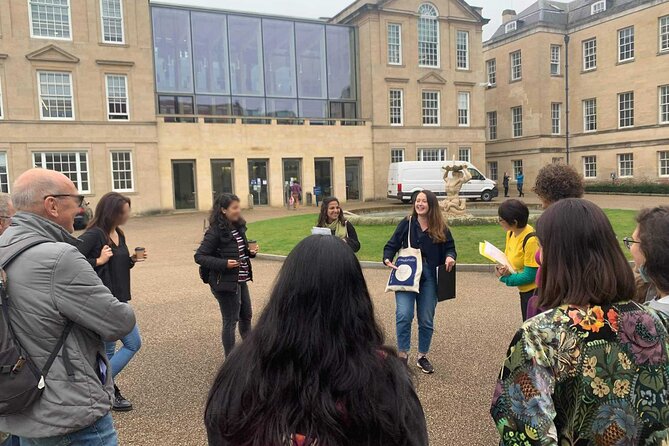
- The group is capped at 15 people: That makes it easier to hear the guide and take part in discussion.
- The tour is built around Oxford’s streets and buildings: You see the Bridge of Sighs, New College, the Bodleian Library, the Clarendon Building, the King’s Arms, the Natural History Museum, St Giles’ Memorial Garden, and St Luke’s Chapel.
- Devika’s style earned particular praise: Her approach includes sources, questions, and social context, making this more than a list of medical milestones.
- The price is $95.98 per person: You are paying for a focused specialist tour, a certified Uncomfortable Oxford guide, and a souvenir postcard, not admissions to a series of paid attractions.
- The route ends away from the starting point: You begin beneath the Bridge of Sighs and finish at the Radcliffe Observatory Quarter, so plan your next stop from there.
Why this Oxford tour feels different
Oxford tours often focus on colleges, famous scholars, and architectural details. This one uses the city as a way to ask harder questions: Who received medical care? How did disease shape urban life? How did war speed up medical change? Who benefited from scientific progress, and who paid the cost?
That wider frame is the tour’s strongest feature. You are not only hearing about inventions. You are looking at the social conditions around them. A discussion of plague, for example, begins with medieval geography. A stop on inoculation takes place outside a pub. The story of modern medicine includes prostitution, imperialism, wartime treatment, and the founding of the NHS.
I like this approach because it keeps medicine connected to daily life. You do not need a medical background to follow the route. The tour is likely to suit you if you enjoy history with a social angle, university towns, public health, or the way familiar institutions change over time.
The small group matters, too. With no more than 15 people, the guide can make room for questions. The experience is offered in English, and the certified guide comes with a Uncomfortable Oxford souvenir postcard. It is a modest extra, but a nice physical reminder of a tour that is mainly built around conversation and place.
More Historical Tours in Oxford:
- Oxford: 90 minute Architectural & Historical Highlights Tour
★ 5.0 · 23 reviews - Natural History Museum Tour – by Uncomfortable Oxford™
★ 4.5 · 17 reviews - Reformation Oxford Christian History Tour private groups
★ 5.0 · 14 reviews
Beneath the Bridge of Sighs: medieval Oxford and disease
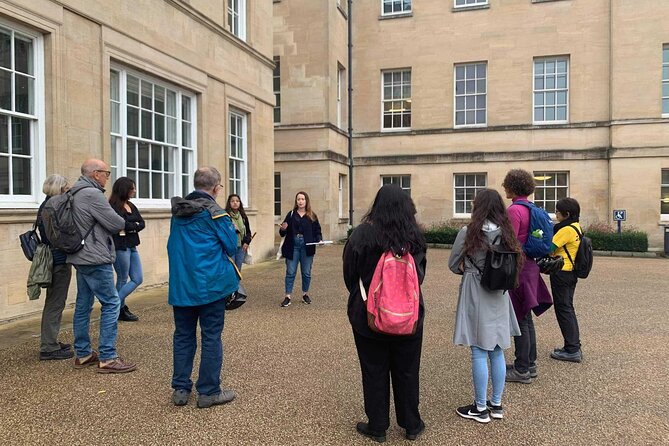
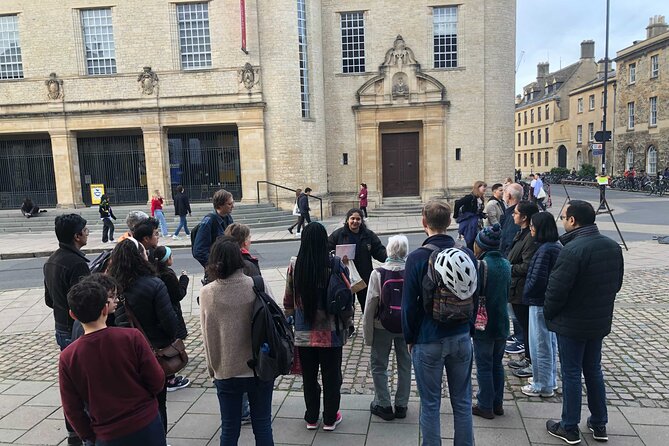
The tour starts under the Bridge of Sighs on New College Lane. This opening stop lasts about 10 minutes and sets up the central idea of the walk: geography affects health.
You learn how the medieval shape of Oxford influenced the spread and experience of disease. That gives you a useful foundation before the tour turns to specific outbreaks. Instead of treating plague as an isolated event, the guide places it within the city’s streets and built environment.
I appreciate this opening because it helps you look at Oxford differently. The bridge is a familiar photo stop, but here it becomes a starting point for thinking about movement, crowding, and the conditions in which illness could spread. Admission is free, and the tour begins outdoors, so you can join without entering an attraction at this stage.
The starting point is easy to identify, but New College Lane can be busy with pedestrians. Arrive with enough time to find the guide and settle in before the discussion begins.
New College and the long shadow of plague
The first main stop is outside medieval New College. The group spends about 10 minutes discussing plague and historical epidemics.
This is a short stop, but it gives the tour an early sense of scale. You are not only hearing about one outbreak. You are considering how epidemics affected Oxford over time and how communities responded to serious disease.
The setting works well because New College places you close to Oxford’s medieval past without requiring a paid college visit. The guide can connect the building and surrounding area to the larger medical story while you remain on the public route.
If you want a detailed account of every epidemic, this section may feel quick. The benefit is that it keeps the walk moving and leaves room for later subjects that are often missing from traditional medical tours, including public health and the NHS.
The Bodleian Library and the early study of anatomy
At the Bodleian Library, the tour enters the heart of Oxford’s old libraries for about 15 minutes. Here the subject shifts to anatomical dissections and the early study of medicine at the University.
This is one of the most distinctive parts of the route. The Bodleian is strongly associated with books and scholarship, but the stop reminds you that medical learning also depended on examining the human body and developing methods of study.
The setting gives the subject weight without turning the tour into a technical lecture. You can expect an explanation of how anatomy fit into the University’s early medical tradition, along with the questions and social issues that shaped the practice.
Because this stop is inside the old library area, listen closely to the guide’s meeting instructions at the beginning. The overall tour remains a walking experience, not a long indoor visit, so you should not expect extended time in the library.
Something different for another day:
- Oxford University Walking Tour With University Alumni Guide
★ 5.0 · 6,905 reviews - 1.5-hour Oxford City and University Walking Tour
★ 4.5 · 1,383 reviews - Oxford Official University & City Tour
★ 5.0 · 1,134 reviews - City Sightseeing Oxford Hop-On Hop-Off Bus Tour
★ 4.5 · 1,042 reviews
The Clarendon Building, prostitution, and public health

The Clarendon Building is now the office of the Vice Chancellor, but the tour uses it to discuss the history of prostitution and public health. The stop lasts about 10 minutes.
This is the kind of subject that makes the tour feel broader than a standard account of doctors and discoveries. Public health is not only about hospitals or laboratory work. It also involves regulation, sexual health, social attitudes, and the treatment of people working on the margins of society.
I like the choice of location. A prestigious University setting creates a useful contrast with a subject that is often ignored or treated as an aside. The guide’s job here is not merely to tell a scandalous story. The point is to show how medicine and public policy interact.
The stop may not be right for very young children, depending on your family’s preferences, since prostitution is part of the discussion. For adults interested in the less polished side of social history, it adds real substance.
The King’s Arms and Oxford’s pub-based inoculation
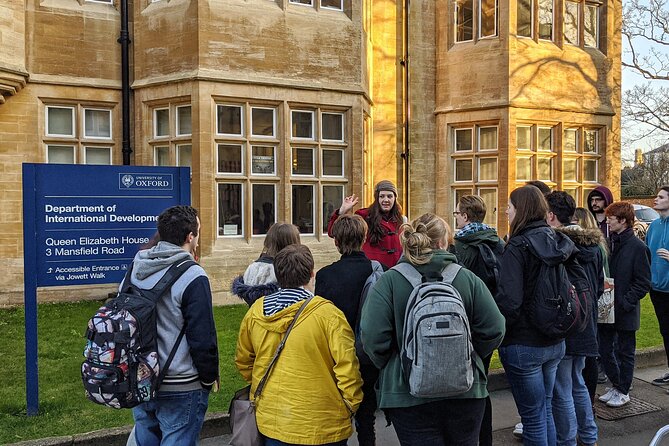
The King’s Arms brings the tour into an everyday Oxford setting. You spend about 15 minutes learning that pubs served as the original place for inoculation in the city.
This is one of the route’s most memorable details because it challenges modern assumptions about where medical treatment belongs. Today, you associate inoculation with clinics and hospitals. In this earlier setting, a pub could be part of the process.
The stop also shows why place-based history works so well. You are not studying an abstract medical practice from a classroom. You are standing outside a real Oxford institution while hearing how health care was organized in the city.
The pub itself is included as a historical setting, not as a scheduled food or drink stop. Do not book this tour expecting a pub crawl or time for refreshments. The value here is the unexpected connection between ordinary social spaces and medical practice.
The Natural History Museum and medicine shaped by empire
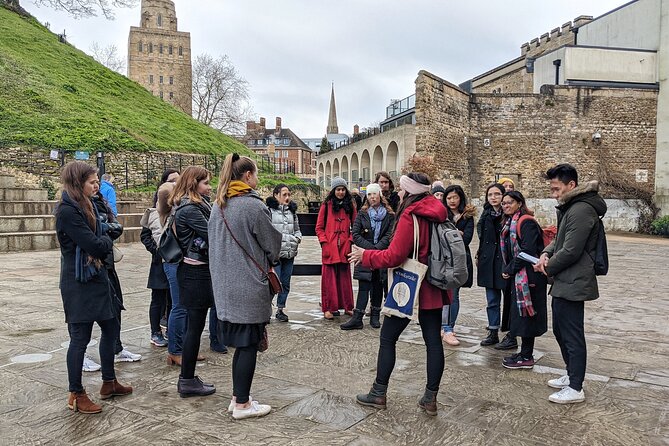
Outside the Oxford University Museum of Natural History, the tour spends about 15 minutes examining how science and medicine changed in the 18th century through imperialism.
This is an important turn in the route. Medical progress is often presented as a clean sequence of discoveries. This stop asks you to consider the political systems, global connections, and unequal power behind scientific change.
The museum provides an apt setting for that discussion because it represents the relationship between collecting, classification, science, and the wider world. The guide can place medical developments within that larger movement without requiring you to spend time inside the museum.
This section may be especially useful if you want a tour that addresses the difficult parts of scientific history. It is not simply a celebration of progress. You are encouraged to consider how knowledge was gathered and whose interests it served.
Again, the stop is outside the museum. Admission is free as part of the walking tour, but the experience does not include a separate museum visit.
St Giles’ Memorial Garden and wartime medical change
At the War Memorial Garden, also called St Giles’ Memorial Garden, the group spends about 15 minutes reflecting on medical developments that came from the First and Second World Wars.
War caused immense suffering, but it also forced rapid changes in medical practice. This stop looks at that difficult relationship. You are asked to consider how emergency conditions pushed doctors and institutions to develop new ways to treat injuries and illness.
The memorial setting encourages a quieter pause after the earlier discussions of plague, public health, and imperialism. It links medical change to human cost rather than presenting innovation as an isolated success story.
This part of the tour is likely to appeal to you if you enjoy modern history as much as medieval Oxford. It also gives the walk a clear sense of progression, moving from early disease and anatomy toward the medical systems that shaped the 20th century.
St Luke’s Chapel, penicillin, and the birth of the NHS
The final stop is outside St Luke’s Chapel, at the former city hospital. About 15 minutes are devoted to early trials of penicillin in Oxford and the founding of the NHS.
Ending with penicillin and the NHS gives the tour a strong narrative finish. You have moved from medieval conditions and early anatomy to modern public health and organized medical care.
The location matters. Discussing early penicillin trials outside a former city hospital ties scientific development to a place where medical treatment was delivered. The NHS discussion then widens the focus again, showing how medicine became part of a national system.
This is a good final stop because it leaves you thinking about access to care, not just discoveries. It also gives you a clear endpoint at the Radcliffe Observatory Quarter. Since the tour finishes there rather than returning to the Bridge of Sighs, plan your next Oxford activity from the Radcliffe Humanities area.
What the guide adds to the experience
The guide can make or break a specialist walking tour. Here, the strongest feedback points to Devika’s teaching style. She shared sources, encouraged questions, and asked the group to ponder ideas rather than simply listen.
That matters because the tour covers subjects that need context. Plague, prostitution, imperialism, and wartime medicine cannot be reduced to a string of dates. You get more from them when the guide explains social effects and invites you to think through the choices made by institutions and communities.
I would choose this tour if you prefer discussion to performance. It is not designed as a light sightseeing circuit with a joke at every corner. The tone is thoughtful, and the subject matter can be serious. The reward is a more complete view of how medical practice developed.
The guide is certified, the tour is in English, and the group limit of 15 supports conversation. The tour has received an overall rating of 4.5 from eight ratings, with the strongest praise focused on the guide’s pleasant manner, broad subject knowledge, use of sources, and ability to connect medicine with social impacts.
Is $95.98 good value?
At $95.98 per person, this is not a bargain-priced orientation walk. The value depends on what you want from Oxford.
You are paying for a specialist subject, a certified Uncomfortable Oxford guide, a small group capped at 15, and a carefully linked route through central Oxford. All listed stops have free admission, so the price is not covering a series of entry tickets. It is paying for interpretation, organization, and access to a subject you would be unlikely to piece together on your own.
I think the price makes more sense for you if medicine, public health, social history, or Oxford University history is a main interest. It is less convincing if you simply want a general introduction to the city, since the tour gives limited time to each location and does not focus on the full range of Oxford sights.
The souvenir postcard is a small inclusion rather than a major value point. The real benefit is the guide’s ability to connect eight places into one argument about disease, care, science, and society.
Timing, group size, and practical planning
The tour lasts about 1 hour 45 minutes. Eight stops fit into that time, with most stops lasting 10 or 15 minutes. You should expect a steady walk with frequent pauses, rather than a long stay at any one building.
The meeting point is beneath the Bridge of Sighs on New College Lane, Oxford OX1 3BL. The tour ends at Radcliffe Humanities in the Radcliffe Observatory Quarter, Woodstock Road, Oxford OX2 6GG.
That point-to-point format is useful if you are planning another activity near the Radcliffe Observatory Quarter. It is less convenient if you need to return immediately to New College Lane, so factor in the separate journey when arranging your day.
You receive booking confirmation at the time of booking, and mobile tickets are available. The tour is near public transportation, service animals are allowed, and most people can take part. Tips are not included.
Group discounts are available. The experience is usually booked about 12 days ahead, so I would not leave it until the last minute if your Oxford dates are fixed.
Free cancellation is available if you cancel at least 24 hours before the start time. Changes or cancellations made less than 24 hours before the start time are not accepted for a refund. A minimum number of participants is required, and if that number is not reached, you will be offered another date or experience, or a full refund.
Who should book this Oxford walk?
I would recommend it to you if you enjoy:
- Medical history presented through real places
- Oxford University settings with social context
- Thoughtful discussion rather than simple sightseeing
- Difficult subjects such as plague, prostitution, imperialism, and war
- Small groups where you can ask questions
- A route that ends at a different point from where it starts
You may want to skip it if you prefer a broad city introduction, a tour centered on famous interiors, or a relaxed pace with long stops. The route is focused, serious, and packed with themes.
Should you book the History of Medicine Tour?
Book this tour if you want to see Oxford through the story of health care, disease, science, and public policy. I especially recommend it if you have already seen the city’s main colleges and want a fresh angle on places such as the Bodleian Library, the King’s Arms, and the Natural History Museum.
The best reason to go is the connection between subjects that are usually taught separately. You move from medieval geography to plague, from anatomy to public health, from pub-based inoculation to imperial science, and from wartime medicine to penicillin and the NHS.
At $95.98, it asks you to pay for a specialist guide rather than a collection of admissions. For the right audience, that is the point. If you want a serious, discussion-led walk with a small group and a social view of medicine, this is a worthwhile Oxford choice.
FAQ
Where does the History of Medicine Tour begin?
It begins beneath the Bridge of Sighs on New College Lane in Oxford, at New College Lane, Oxford OX1 3BL, UK.
Where does the tour finish?
The tour finishes at Radcliffe Humanities in the Radcliffe Observatory Quarter, Woodstock Road, Oxford OX2 6GG, UK.
How long does the tour last?
The tour lasts approximately 1 hour 45 minutes.
What language is the tour offered in?
The tour is offered in English.
How many people can join the tour?
The maximum group size is 15 people.
What is included in the tour price?
The price includes a certified Uncomfortable Oxford guide and an Uncomfortable Oxford souvenir postcard.
Are admission tickets included?
All listed stops have free admission. The experience does not list separate paid attraction tickets as an inclusion.
Can I cancel for a full refund?
Yes, you can cancel for a full refund if you cancel at least 24 hours before the experience start time. Changes or cancellations made less than 24 hours before the start time are not accepted for a refund.
Just added around Oxford
- Cotswolds One Day Guided Cycle Tour – Private Groups★ 5.0 · 7 reviews
- Follow the Money Tour – by Uncomfortable Oxford™★ 5.0 · 7 reviews
- CS Lewis & Tolkien Tour with Magdalen Entry Public tour 13.45★ 5.0 · 8 reviews
- Oxford Scenic Cycle Tour- 2 persons minimum summer season★ 5.0 · 8 reviews
- Oxford Private Guided Walking Tour★ 4.5 · 8 reviews
- Oxford: to Cotswolds (Half Day)★ 5.0 · 8 reviews
- Oxford Walking Tour – Discover its University and Traditions★ 4.0 · 9 reviews
- Ashmolean Museum Tour – by Uncomfortable Oxford™★ 5.0 · 9 reviews
Historical Tours, compared.

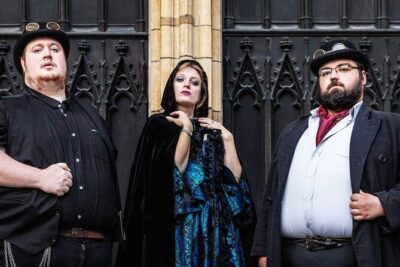
Shadows of York: Ghost Walk and Horrible History.
Read our review →
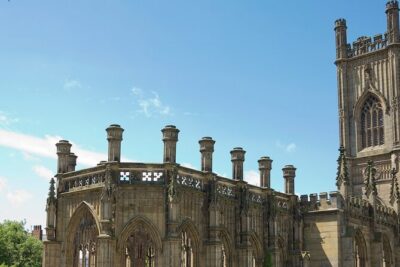
A Walk Through Time: History of Liverpool Walking Tour
Read our review →
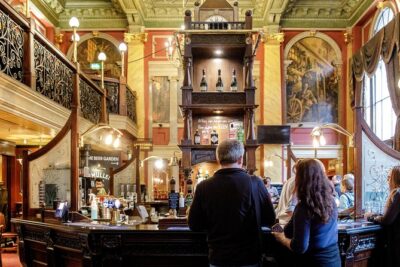
Royal Historic Pubs Walking Guided Tour in London
Read our review →
Private Group: Historical Pub Walking Tour of London
Read our review →
Best Of Liverpool Heritage, History & Culture Guided Walking Tour
Read our review →Browse the lists this tour appears in