
Reviewed · MANCHESTER TOURS
Private Manchester Self-Guided Tour
Manchester rewards curious walkers. This self-guided audio tour links the city’s major sights with stories about Vimto, Alan Turing, cotton, music, canals, and Roman Manchester. I like the freedom to pause whenever you wish, and I like that the GPS map helps you follow a clear route without a live guide.
The price is attractive at $12.35 per person, especially for independent visitors who want a city overview. The main drawback is that this is an app experience, not a traditional walking tour with a person beside you. App activation can be fiddly, and your phone battery matters.
In This Review
- Key points to know before you book
- A low-cost way to get your bearings in Manchester
- Starting at Vimto Park with a northern soft drink
- Alan Turing, Sackville Gardens, and Canal Street
- Chinatown and the grand center at St Peter’s Square
- Bridgewater Hall and two painful chapters
- Cotton, the Royal Exchange, and the IRA bombing
- The Shambles, the Corn Exchange, and old pubs
- Manchester Cathedral and the John Rylands Library
- The Midland Hotel, Central Library, and Guardian Telephone Exchange
- Manchester Central and the railway age
- Castlefield, Roman Manchester, and the finish
- How the app works in real life
- Who will get the most from this $12.35 tour
- Should you book it?
- FAQ
- Is this a live guided walking tour?
- How long does the Manchester tour take?
- Where does the tour start?
- Where does the tour finish?
- What language is available?
- Are entrance fees included?
- How long can I access the tour?
- What should I do if the GPS does not guide me?
Key points to know before you book
- Start with Manchester-made Vimto: The walk begins where the famous northern soft drink was first produced.
- Follow 18 points around central Manchester: The route connects Sackville Gardens, Canal Street, Chinatown, St Peter’s Square, the Cathedral, Castlefield, and more.
- Use Jake’s recorded narration: The audio guide features a human voice, plus images, videos, directions, and local suggestions.
- Plan for two to three hours: That timing works for the walk itself, but interior visits can make the outing longer.
- Bring a charged phone: GPS permissions and the activation code are essential for a smooth start.
- Expect no admission fees included: Manchester Cathedral and the John Rylands Library are mentioned, but entry costs are not part of the tour.
A low-cost way to get your bearings in Manchester
This walk is built for people who like to set their own pace. You receive three weeks of unlimited access through an app, so you do not have to finish every stop in one continuous push. You can pause the route for lunch, step inside a building, or return to a point later during your stay.
I like that the route gives you a useful first look at central Manchester rather than sending you to one isolated sight. In roughly two to three hours, you move from the city’s soft-drink heritage to its Victorian civic centre, industrial past, religious buildings, and Roman beginnings.
The experience costs $12.35 per person. That is a modest price for recorded commentary, a GPS route, photographs, videos, directions, and recommendations. It is particularly good value for couples or families who would otherwise pay separately for a private guide.
Still, you should understand exactly what you are buying. There is no meeting with a guide, no fixed departure time, and no small group waiting at Vimto Park. Jake provides the narration through the app. That makes the tour private, but it also means you must manage the technology yourself.
A few more tours and experiences worth a look
- Murder Detective Self-Guided Tour in Manchester
★ 3.5 · 16 reviews - Westminster Abbey Entrance Ticket Including Audio Guide
★ 4.0 · 661 reviews - Western Approaches Self Guided Tour
★ 5.0 · 505 reviews
Starting at Vimto Park with a northern soft drink
The route begins at Vimto Park in the M1 area, close to central Manchester. The first stop takes about five minutes and introduces the whole walk through the story of Vimto, the soft drink first produced at this location.
This is a clever opening. Manchester is often introduced through cotton mills, football, and the Industrial Revolution, but Vimto adds a more everyday local story. You get a reminder that the city’s commercial past was not only about factories and railways. It also produced familiar goods that traveled far beyond the region.
The stop is free, and you do not need to enter an attraction. Open the app before you set off, check that location access is enabled, and make sure the correct activation code is available. The booking reference is not the same as the code used to activate the tour.
Alan Turing, Sackville Gardens, and Canal Street
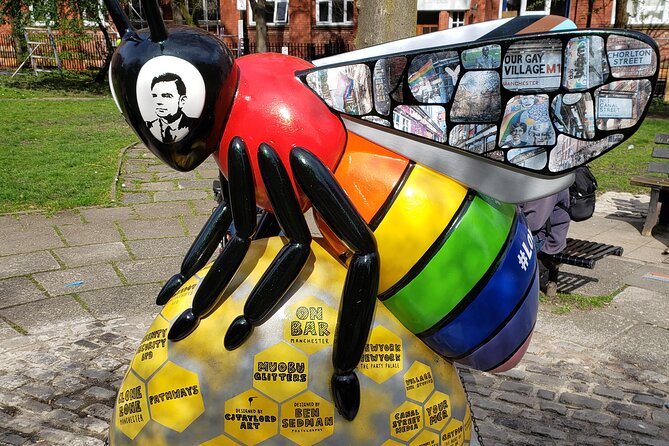
The walk next reaches the Alan Turing Memorial in Sackville Gardens. Allow about ten minutes here. The narration explains who Turing was, why he matters to Manchester, and how the garden’s monuments connect with the city’s past.
This stop also begins the introduction to Manchester’s Gay Village. The value here is not just seeing a statue or taking a photograph. You are given some context for the surrounding streets and the people who helped shape them.
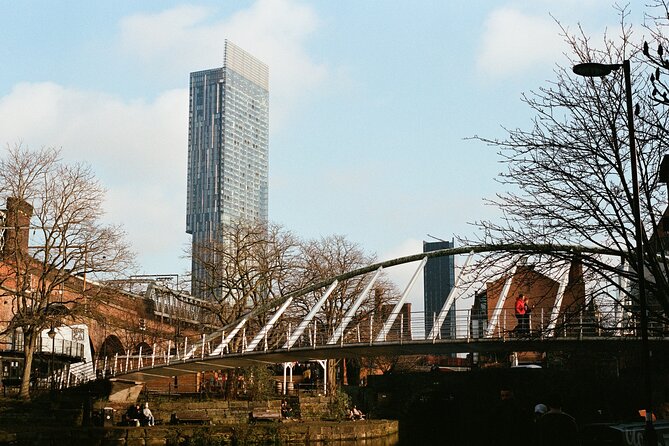
Canal Street receives about fifteen minutes. The route explains how a street with a difficult past became one of Manchester’s best-known social areas. The canal-side pavement is now inviting, but the commentary does not treat the area as decoration alone. It points you toward the changes in public life and community that helped shape the Gay Village.
This part of the walk is best taken slowly. The app gives you the background, but you should look around rather than stare at your phone. The Canal Street stop works well as an introduction to the city’s social history, though anyone seeking a longer, more detailed LGBTQ history tour will probably want another source as well.
Chinatown and the grand center at St Peter’s Square
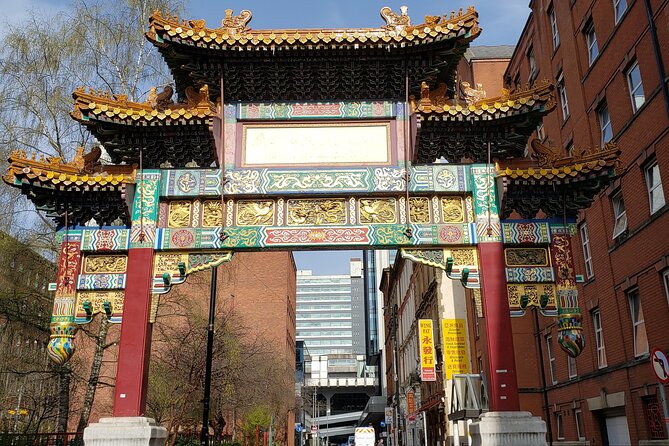
The Chinatown stop takes about ten minutes. You pass beneath the archway, look at the shops and restaurants, and learn which Chinese city is twinned with Manchester and why the arch was built here.
It is a short stop, but it breaks up the route nicely. After the quieter gardens and canal, Chinatown gives you a different view of the city center. The app focuses on orientation and key facts, so you can continue exploring the area on your own afterward.
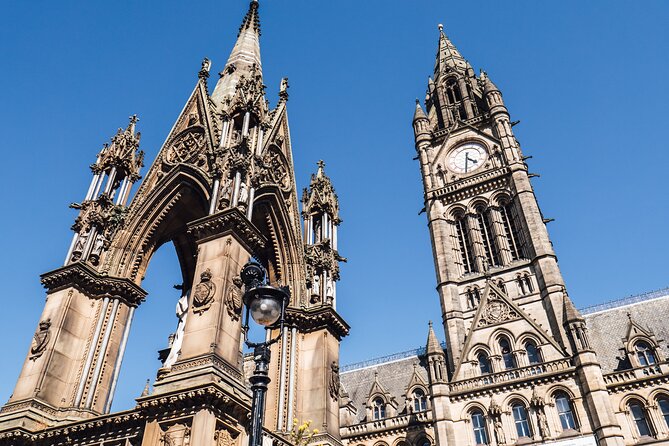
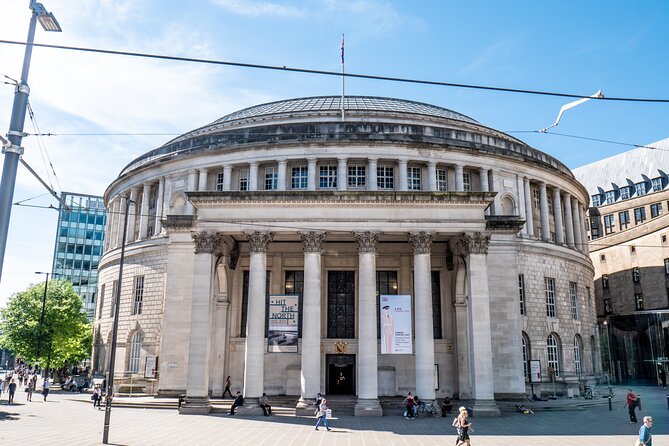
St Peter’s Square is one of the route’s strongest sections. Plan on fifteen minutes. The audio points out Manchester Central Library, the Midland Hotel, Manchester Town Hall, and other important buildings around the square.
The library is presented as the oldest free library in the country, while the Midland Hotel represents the grand age of northern railway luxury. You also hear why the square is called St Peter’s Square and learn about events connected with the place.
This is a good example of why a recorded route can work well. Instead of looking at a building and moving on, you get a framework for understanding how the square fits into Manchester’s civic life. The drawback is timing. Fifteen minutes goes quickly here, especially if you want photographs or if Town Hall and the library draw your attention.
Something different for another day:
- The Manchester City Stadium Tour
★ 5.0 · 4,176 reviews - Alcotraz Prison Cocktail Experience in Manchester
★ 5.0 · 1,216 reviews - LEGOLAND Discovery Centre Manchester
★ 4.0 · 1,049 reviews - Manchester Afternoon Walking Tour
★ 5.0 · 1,033 reviews
Bridgewater Hall and two painful chapters
The Bridgewater Hall stop takes around fifteen minutes. The commentary covers the hall and the surrounding district, then turns to two troubling stories connected with Manchester Central Station.
One event occurred in 1819 and the other in 1963. The material is not simply a list of cheerful landmarks. It shows how the city’s public spaces have also been linked with violence, tragedy, and memories that still affect local people.
That balance is useful. A city walk should not reduce Manchester to handsome buildings and industrial success. You get a more honest sense of the place by hearing about its harder chapters too.
The stop is free, and the hall is viewed from the surrounding area. If you want to attend a performance or enter the building, that is separate from this experience.
Cotton, the Royal Exchange, and the IRA bombing
At the Royal Exchange Theatre, the audio spends about fifteen minutes explaining Manchester’s cotton industry. You learn how cotton grew into a major force in the city and what its success meant for trade, work, and urban development.
The building itself helps make the story concrete. It was tied to the business world that made Manchester a major industrial center. The route also covers the IRA bomb and its effect on the city.
This is one of the places where you will get more from the walk if you pause and look closely at the architecture. The narration gives you the basic story, while the building provides the physical evidence of Manchester’s commercial ambition.
The cotton section is useful, but it is still an overview. If industrial history is your main reason for visiting, you may want to spend extra time at other museums or historic sites after completing the walk. This tour gives you the city center context rather than a full study of factory life.
The Shambles, the Corn Exchange, and old pubs
The Shambles is described as one of the prettiest squares in the center. The route takes about ten minutes and introduces the Old Wellington and Sinclair’s Oyster Bar, two of the city center’s best-known old pubs.
The Old Wellington is connected with John Shaw’s Punch House, and the commentary explains why the pub remains so popular and relatively inexpensive. The point is not only where to have a drink. You also learn how old commercial buildings and pub culture survived amid the city’s major redevelopment.
The square also brings cotton trade into the story through the Royal Corn Exchange. The cotton boom helped create opportunities for trading other goods, and the exchange became an important market building.
Several additional points around this area cover the Corn Exchange, now used for food, accommodation, and other purposes, along with the old pubs. These short sections are practical because they turn history into possible stops for your own afternoon. The route does not include food or drink, so any visit inside a pub or food court costs extra.
Manchester Cathedral and the John Rylands Library
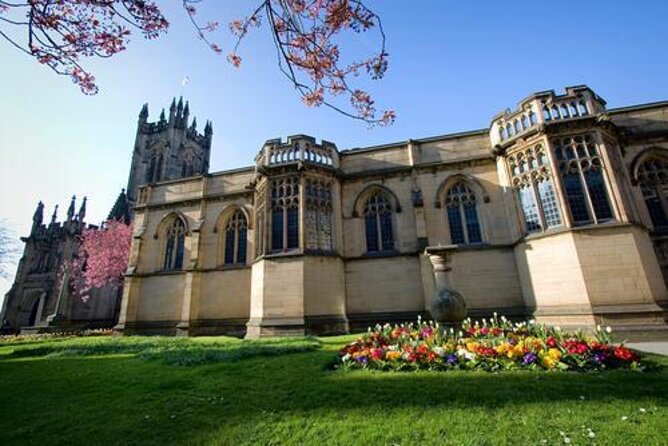
Manchester Cathedral receives about five minutes. It is the mother church of the Anglican Diocese of Manchester, the seat of the Bishop of Manchester, and the city’s parish church.
Five minutes is enough for a quick introduction, but not enough for a careful visit. If the doors are open and you want to look inside, allow extra time. Any admission fee is not included.
The John Rylands Library is given a much longer thirty-minute section. That is sensible. The building is one of Manchester’s most striking interiors, with an atmosphere that can remind you of a film set or an old college hall.
The narration explains the building and recommends going inside if you have time. This is one of the most worthwhile suggestions on the route. The audio can tell you why the library matters, but the architecture is best experienced in person.
The library has strong visual appeal, yet you should note the practical point: entrance is not included. The tour only provides information about the site. Check the library’s own arrangements before building your schedule around an interior visit.
The Midland Hotel, Central Library, and Guardian Telephone Exchange
The route includes extra points near the central civic buildings. The Midland Hotel has been part of Manchester life for more than 118 years and is known for its architecture and stories connected with the city.
Manchester Central Library receives attention as well. The present building is not the original public library, but the route explains how the city’s library tradition developed after the Public Libraries Act of 1850 and how the Greek-style building came to be.
Another point introduces the Guardian Telephone Exchange, described as one of Manchester’s best-kept secrets. It is a useful reminder that the city center contains more than its headline sights. You might pass it without knowing what it is, so the extra commentary gives you another reason to look carefully as you walk.
These short additions are not separate museum visits. They are audio points that widen the route beyond the main landmarks. I like that approach, but you should keep expectations realistic. You are receiving an introduction from the street, not a guided interior tour.
Manchester Central and the railway age
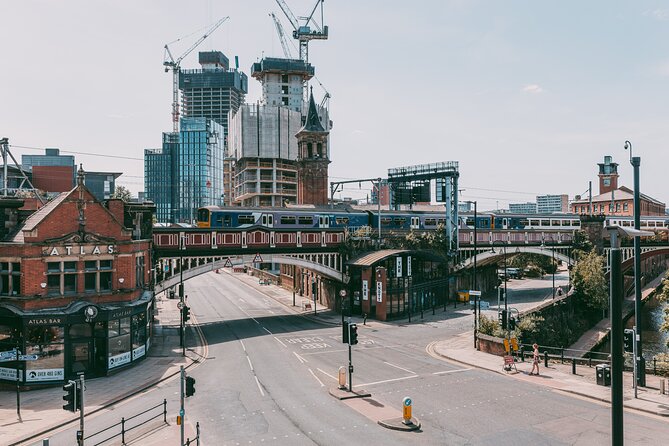
Manchester Central is now a convention center, but it was once Manchester Central Train Station, used by the Midland Railway. The stop takes about ten minutes.
The narration covers the station’s development, a massacre that occurred before trains existed, and the mysterious story of a suitcase left at the station in 1965. These details give the building a sense of drama without requiring you to enter it.
The stop also helps explain why railway buildings matter so much in Manchester. Railways connected the cotton city with markets, workers, ports, and other industrial centers. You begin to see the city not as a collection of unrelated buildings, but as a place shaped by movement and trade.
Again, the tour keeps the story moving. If you enjoy railway history, this is a place to pause and read any available signs or explore the surrounding district after the audio ends.
Castlefield, Roman Manchester, and the finish
The final main stop is Castlefield Urban Heritage Park, near Deansgate. The route ends at Castlefield Bowl on Rice Street, close to the Roman fort, after roughly fifteen minutes of commentary.
This is where the tour returns to Manchester’s earliest beginnings. You learn about the Roman settlement, the reconstructed remains, and the reason behind the city’s name. The park’s canals and open spaces provide a pleasant change after the denser central streets.
The walk finishes with recommendations for places to eat and things to do around Deansgate. Those suggestions are useful because Castlefield works well as a point for continuing your day rather than simply catching transport away.
The final section is also a good reminder that the advertised two to three hours is an estimate. If you enter the library, visit the Cathedral, stop for food, or spend time at the pubs, the outing will take longer. The recorded content itself is structured for a manageable half-day walk.
How the app works in real life
The tour includes GPS mapping, route directions, stops, pictures, videos, recommendations, and audio from Jake. The human narration is a welcome touch. It should feel less mechanical than a computer-generated voice, and the personal delivery helps the stories hold together.
The app is described as user-friendly once installed, but activation is the part to take seriously. Download the required Pandemic Tours app through your app store, read the Before You Go instructions, and activate the tour before you begin. Give the app permission to use your location so the GPS can guide you between points.
There have been problems with codes not working and with setup taking more than thirty minutes. One user also ran out of phone battery after a little more than an hour. I would start with a fully charged phone and carry a power bank if you have one.
If the GPS does not seem to work, check location permissions first. The route does not provide a person walking beside you to solve technical problems on the spot. This is the biggest difference between the experience and a conventional guided walk.
Who will get the most from this $12.35 tour
I would choose this for independent-minded visitors who want a broad introduction to Manchester without joining a group. It suits people who enjoy stopping for photographs, choosing their own pace, and deciding which buildings deserve extra time.
It can also work well for a first afternoon in the city. The route connects many central sights, so you can use it to identify places you want to revisit. The three weeks of access make that easier than a one-use audio file.
It is less suitable if you want lively conversation, spontaneous questions, or deep specialist detail. It is also a poor match if you dislike downloading apps or prefer not to navigate with a phone.
The experience is offered in English only. Most people can participate, and the route is near public transport, but the information does not provide a detailed accessibility assessment. You should check the route and stop locations yourself if mobility access is important to your plans.
Should you book it?
Book this Manchester walk if you want a cheap, flexible overview and are comfortable handling an app. The route covers more than postcard sights: Vimto, Turing, Canal Street, cotton, railways, Roman Manchester, and the city’s difficult memories all appear along the way.
Skip it if you expect a live guide or if technical setup causes more frustration than fun. Before paying, make sure you understand that the experience is private and self-guided, download instructions are available, and admission fees are separate.
At $12.35, I see it as a useful orientation tool rather than a complete account of Manchester. Start with a charged phone, allow extra time for the John Rylands Library and Cathedral, and treat the route as a framework for making your own discoveries.
FAQ
Is this a live guided walking tour?
No. It is a private self-guided tour delivered through an app, with recorded audio from Jake. There is no in-person guide.
How long does the Manchester tour take?
The estimated duration is two to three hours. Extra time may be needed if you enter the John Rylands Library or Manchester Cathedral, stop for food, or explore the sites more carefully.
Where does the tour start?
It starts at Vimto Park, Manchester M1, in central Manchester.
Where does the tour finish?
It finishes at Castlefield Bowl on Rice Street, Manchester M3 4JR, near Deansgate and the Roman fort.
What language is available?
The tour is offered in English.
Are entrance fees included?
No. Any entrance fee for attractions mentioned during the tour is not included. Manchester Cathedral and the John Rylands Library are listed with admission not included.
How long can I access the tour?
You receive three weeks of unlimited access to the self-guided tour through the app.
What should I do if the GPS does not guide me?
Make sure the app has permission to access your location and follow the Before You Go instructions on your e-ticket. The activation code is different from the booking reference.
Just added around Manchester
- Manchester Street Art: Quest Experience★ 4.0 · 6 reviews
- Manchester: Football Experience With A Local Host★ 3.5 · 6 reviews
- Stockport Guided Walking Food Tour★ 5.0 · 7 reviews
- Private Cocktail Making Class in Manchester★ 5.0 · 8 reviews
- MANCHESTER: Yorkshire Adventure – Sightseeing Day Trip Tour★ 5.0 · 9 reviews
- Manchester: Luggage Storage Central★ 5.0 · 10 reviews
- Musical MADchester Quest Experience in Manchester★ 4.0 · 14 reviews
- Murder Detective Self-Guided Tour in Manchester★ 3.5 · 16 reviews
Manchester Tours, compared.


Alcotraz Prison Cocktail Experience in Manchester
Read our review →





Manchester iFLY Indoor Skydiving Experience – 2 Flights & Certificate
Read our review →Browse the lists this tour appears in