

Reviewed · HISTORICAL TOURS
Street Art: The Modern History of the Northern Quarter
Manchester’s walls tell the story. This two-hour walk uses street art, public sculpture, and overlooked corners to explain how the Northern Quarter changed from a declining district into one of the city’s best-known creative areas. I like the focus on social justice and public space, and I like that 10 percent of profits supports local causes. The main consideration is that this is an outdoor walking tour, so poor weather can affect the experience.
I also like the tour’s personal angle. Guide Hayley has been praised for making the material clear and engaging, with useful stories about the old fish market, political forces behind public art, and plans for the area’s future. You should come ready to think as well as look. This is not simply a hunt for colorful walls.
The route begins at Shudehill at 11 a.m. and ends near the Black Dog Ballroom on Church Street. At $20.70 per person, the price is fair if you want context that you will not get from taking photographs alone, though visitors mainly seeking a quick collection of murals may find the two-hour discussion more serious than expected.
In This Review
- Key points at a glance
- Why the Northern Quarter makes such a good classroom
- Starting at Shudehill and reading the city from street level
- From empty buildings to public art
- Contemporary street art with political context
- Streets and film locations you might walk past
- What the two-hour format does well
- The guide makes the difference
- Who should book this Northern Quarter walk
- Practical details that affect your choice
- My verdict on the Northern Quarter street-art experience
- FAQ
- How much does the tour cost?
- How long does the experience last?
- Where does the tour begin?
- What time does the tour start?
- Where does the tour end?
- Is the ticket mobile?
- How many people can join the tour?
- Can I cancel for a full refund?
- What happens if the tour is canceled?
Key points at a glance
- Twenty-five years of street art: Follow the Northern Quarter’s change through public art from the 1990s to today.
- A ceramic art trail: See how a group of public artworks helped draw attention back to an area in decline.
- Manchester’s difficult questions: Hear about gentrification, social justice, lost public space, and who benefits from urban change.
- Details beyond the usual list: The route includes lesser-known artworks, streets, and film locations.
- A guide with local insight: Hayley’s stories cover the old fish market, politics, architecture, and future plans.
- A socially minded booking: Ten percent of profits goes to local causes, adding purpose to the ticket price.
Why the Northern Quarter makes such a good classroom
The Northern Quarter is often presented as Manchester’s café, bar, music, and street-art district. That description is not wrong, but it leaves out the awkward middle chapters. The area was once in decline after the opening of the Arndale Centre, Manchester’s first American-style shopping mall. Businesses moved away, buildings were left empty, and the district lost much of its daily purpose.
That decline matters because the Northern Quarter’s current appeal did not appear by magic. Its protected buildings, independent businesses, cultural spaces, and public artworks grew out of a long period when the area was considered less useful and less desirable. In the early 1990s, Tony Wilson called it our Detroit, pointing to the scale of abandonment.
I like the way this tour uses art to make that change easier to understand. Instead of treating a mural as a separate attraction, you look at who paid for it, where it sits, what it replaced, and how people now use the street around it. That approach gives you a better sense of Manchester as a working city with competing interests.
The tour also asks what happens after an area becomes fashionable. Gentrification can bring investment, new shops, and safer or better-maintained streets. It can also push out older businesses, reduce affordable space, and turn public areas into settings for consumption rather than places for everyone. You will not get a simple good-news story, and that is part of its value.
A few more tours and experiences worth a look
- Manchester Street Art: Quest Experience
★ 4.0 · 6 reviews - London Bike Tour: Landmarks, Secret Gems, Pub Stop & Street Art
★ 5.0 · 943 reviews - Shoreditch Street Art Tour London
★ 5.0 · 481 reviews
Starting at Shudehill and reading the city from street level
The meeting point is Shudehill, Manchester M4, with an 11 a.m. start. This is a useful time for an outdoor walk because you have the rest of the day free afterward, and the end point near Church Street puts you close to places where you can continue exploring or stop for food.
You should arrive with your phone ticket ready. The booking uses a mobile ticket, and confirmation is provided at the time of booking. The route stays in central Manchester, near public transportation, so getting to the starting point should be straightforward from elsewhere in the city.
From the beginning, the point is to look up, down, and around. Street art is easy to miss when you are walking with your eyes fixed on a map. A guide can direct your attention to pieces that blend into brickwork, shopfronts, old industrial buildings, and side streets. This is particularly useful in a district where the most interesting work may not be the largest or most photographed.
The maximum group size is 30. That is large enough to create energy but still small enough for a walking guide to keep the route together. A group of that size can make narrow streets feel crowded, so your enjoyment may depend partly on how much discussion you prefer. The walk is designed for most people to take part, and service animals are allowed.
From empty buildings to public art
One of the tour’s strongest themes is the role of public art in changing how people saw the Northern Quarter. When an area has empty buildings and little commercial activity, art can make it feel noticed again. It can encourage people to walk through, open a conversation, or give a neglected street a reason to be visited.
The ceramic art trail is an especially useful example. You will learn how a series of ceramic works helped bring attention to the district and contributed to its renewal. I like this part because it moves the discussion away from the idea that street art is only decoration. A public artwork can be a marker of local identity, a planning tool, a political statement, or a signal that investment is arriving.
That last point deserves some care. Art may help revive a place, but the results are not shared equally. Once a district gains a creative reputation, rents and business costs can rise. The same artwork that gives a neighborhood character can also help market it to property developers and new commercial interests.
The tour treats that tension as part of the subject. You are encouraged to consider how the Northern Quarter became desirable, who helped make that happen, and what may be lost when an informal cultural area becomes a branded destination. I find that more useful than simply being told that the neighborhood has changed.
Contemporary street art with political context
The modern work along the route provides a second layer. You will see contemporary street art and hear how politics can shape what appears in public space. One of the details that makes the walk more interesting is the attention to political influences around the art.
That does not mean every work is explained as a grand political symbol. Instead, the guide helps you notice the decisions behind public art: who has access to walls, who approves work, what messages are welcomed, and which voices may be missing. In a city dealing with questions of development and public access, those details matter.
I appreciate tours that do not force every painting into a single interpretation. Street art can be made for protest, humor, beautification, publicity, or personal expression. Sometimes its meaning changes as the neighborhood around it changes. The guide’s role is to give you enough local context to form your own view.
Hayley has received particular praise for making these connections engaging rather than heavy. Her stories include the old fish market and the political background surrounding art in the area. Those anecdotes add texture to the walk. They also help you picture the Northern Quarter as a place where ordinary trade, civic decisions, and cultural movements overlapped.
More Historical Tours:
- Angel Meadow Manchester History Tour with Author Dean Kirby
★ 5.0 · 65 reviews - London Small Group Tour of Historical Pubs
★ 5.0 · 10,422 reviews - Soho Music & Historic Pubs Tour
★ 5.0 · 1,993 reviews - Shadows of York: Ghost Walk and Horrible History.
★ 5.0 · 1,403 reviews
Streets and film locations you might walk past
A good walking tour should teach you how to see a familiar street differently. This route includes streets and film locations that do not always appear in standard Manchester lists. That is a strong reason to choose it over a self-guided mural checklist.
Film locations are useful here because they show how the Northern Quarter’s look has become part of Manchester’s public image. Old façades, narrow streets, and industrial details can serve as visual shorthand for the city. At the same time, a film set can simplify or reshape the real place. The tour gives you a chance to consider both the image and the neighborhood behind it.
The less famous streets may be just as rewarding as the better-known artworks. You may find that a small installation, an unusual building detail, or a side-street piece says more about the district than a large mural designed for photographs. Bring a camera if you like, but do not let photography take over. The value is in the explanation attached to each place.
You can also ask for suggestions about where to eat and what else to see. Since the walk ends at Black Dog Ballroom, 52 Church Street, you will finish in a part of the Northern Quarter with options nearby. The tour does not promise a food stop, so treat these recommendations as practical advice rather than part of the itinerary.
What the two-hour format does well
Two hours is a sensible length for this subject. It gives the guide enough time to explain the district’s decline, the rise of public art, current concerns, and selected works without turning the experience into an all-day commitment.
The route appears to be built around one broad stop in Manchester rather than a series of formal admissions. That means the interest comes from the streets themselves and from the guide’s interpretation. There is no museum entry or major indoor attraction included, so you are paying for access to local perspective, route planning, and stories.
I see that as good value for the right person. At $20.70, the ticket costs less than many major city attractions and gives you a useful introduction to one of Manchester’s most talked-about districts. It can also improve the rest of your visit. After learning how to read the Northern Quarter, you may notice artworks, buildings, and public spaces that you would otherwise pass without a second look.
The value is weaker if you want a fast, lighthearted walk with constant photo opportunities. This tour spends time on difficult subjects, including gentrification and social justice. It asks you to listen and think. That is a strength for people who want a more serious city experience, but it is not the best match for someone who only wants a mural roundup.
The guide makes the difference
The material covers architecture, heritage, politics, public art, and city planning. Those subjects can sound dry if presented as a lecture. The feedback about Hayley suggests that her delivery is one of the experience’s strongest features. She is described as engaging, clear, and good at connecting the past with present conditions and future plans.
That matters because a street-art tour can easily become a string of names and dates. A good guide creates links between the pieces. Hayley’s stories about the fish market give the area a human scale, while her discussion of political influences explains why public art is never entirely separate from city decisions.
I would choose this tour if you enjoy asking why a place looks the way it does. You do not need specialist knowledge of art, architecture, or urban politics. You only need enough curiosity to look beyond the painted surface.
The experience also seems especially useful for people who already know Manchester. One person who had lived in the city for 25 years said the walk revealed pieces of street art and installations they had never noticed. That is a good reminder that familiarity can make you stop looking. A local guide can expose the gaps in your own city knowledge.
Who should book this Northern Quarter walk
I would recommend it most strongly to:
- First-time visitors who want cultural context before exploring the district alone
- People interested in street art beyond the most photographed murals
- Anyone curious about gentrification, planning, public space, and social change
- Manchester residents who think they already know the Northern Quarter
- Film fans interested in locations away from the usual city highlights
- Visitors who prefer a small-scale, discussion-based experience to a large sightseeing bus
Families can participate if older children are willing to walk and listen, though the serious subject matter may suit teenagers better than very young children. The published information says most people can take part, but it does not provide a detailed description of walking distance or terrain. If that affects your planning, ask the operator before booking.
The tour welcomes service animals. It takes place outdoors and requires good weather, so comfortable clothing and footwear are sensible even though the supplied details do not list a specific dress code.
Practical details that affect your choice
The tour starts at 11 a.m. from Shudehill and ends at Black Dog Ballroom, 52 Church Street. The start and finish are in Manchester’s Northern Quarter area, and the meeting point is near public transportation.
Your ticket is mobile, and confirmation arrives when you book. The group can include up to 30 people. That limit keeps the experience from becoming an enormous procession, though you should expect a public walking tour rather than a private conversation.
The price is $20.70 per person. Since the walk lasts about two hours and includes local interpretation, the cost is reasonable for people who value stories and context. Ten percent of the profits goes to local causes, which gives the purchase a small direct social benefit, although you should not treat that donation as a substitute for checking the operator’s current details if the issue matters to you.
Free cancellation is available if you cancel at least 24 hours before the local start time. Changes or cancellations made less than 24 hours ahead are not accepted for a refund. If bad weather forces cancellation, you can be offered another date or a full refund. The same applies if the minimum number of people is not reached, with the option of another experience or a refund.
My verdict on the Northern Quarter street-art experience
I would book this tour if I wanted to understand how Manchester’s Northern Quarter became what it is today, rather than simply photograph its walls. The strongest parts are the clear social questions, the ceramic art trail, the overlooked installations, and Hayley’s specific local stories.
I would skip it if I wanted an indoor activity, a quick list of famous murals, or a tour with little discussion. The weather requirement also matters. Still, for $20.70, this is a thoughtful way to spend two hours and a good primer for exploring the area on your own afterward.
The best tip is to keep the rest of your day flexible. End near Church Street, ask for food and sightseeing suggestions, and then revisit the Northern Quarter with your new sense of what is behind the paint. That is when the tour proves its worth.
FAQ
How much does the tour cost?
The listed price is $20.70 per person.
How long does the experience last?
The walking tour lasts approximately two hours.
Where does the tour begin?
It begins at Shudehill, Manchester M4, United Kingdom.
What time does the tour start?
The scheduled start time is 11 a.m.
Where does the tour end?
The route ends at Black Dog Ballroom, 52 Church Street, Manchester M4 1PW.
Is the ticket mobile?
Yes. The experience includes a mobile ticket, and booking confirmation is provided at the time of booking.
How many people can join the tour?
The maximum group size is 30 people.
Can I cancel for a full refund?
Yes, if you cancel at least 24 hours before the experience start time. Cancellations made less than 24 hours in advance are not refunded.
What happens if the tour is canceled?
If poor weather causes cancellation, you are offered another date or a full refund. If the minimum number of people is not reached, you are offered another date or experience, or a full refund.
Just added around Manchester
- Manchester Street Art: Quest Experience★ 4.0 · 6 reviews
- Manchester: Football Experience With A Local Host★ 3.5 · 6 reviews
- Stockport Guided Walking Food Tour★ 5.0 · 7 reviews
- Private Cocktail Making Class in Manchester★ 5.0 · 8 reviews
- MANCHESTER: Yorkshire Adventure – Sightseeing Day Trip Tour★ 5.0 · 9 reviews
- Manchester: Luggage Storage Central★ 5.0 · 10 reviews
- Musical MADchester Quest Experience in Manchester★ 4.0 · 14 reviews
- Murder Detective Self-Guided Tour in Manchester★ 3.5 · 16 reviews
Historical Tours, compared.
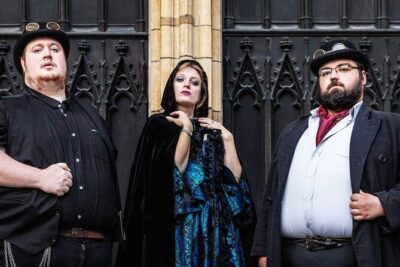
Shadows of York: Ghost Walk and Horrible History.
Read our review →
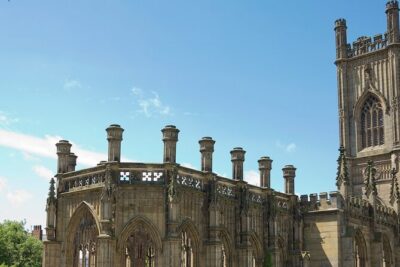
A Walk Through Time: History of Liverpool Walking Tour
Read our review →
Royal Historic Pubs Walking Guided Tour in London
Read our review →
Private Group: Historical Pub Walking Tour of London
Read our review →
Best Of Liverpool Heritage, History & Culture Guided Walking Tour
Read our review →Browse the lists this tour appears in