

Reviewed · MUSEUMS
Ashmolean Museum Tour – by Uncomfortable Oxford™
Museums can tell uncomfortable truths.
This small-group tour gives the Ashmolean Museum a fresh purpose: you do not simply admire beautiful objects, you ask how they arrived, who collected them, and how museums should display them today. I especially like the limited group size of no more than 12 people, and I like that the tour makes room for discussion rather than delivering a rushed lecture. The guide’s open, friendly approach has also been praised, with one participant describing the conversation as stimulating and enjoyable.
The main consideration is the price, about $96.02 per person, for roughly 1 hour and 15 minutes. Your ticket covers a focused guided discussion rather than a full-day museum visit, so this makes the most sense if you want a serious look at collecting, colonialism, ancient art, and human remains. If you only want a quick introduction to the Ashmolean’s famous objects, you may find the cost high.
In This Review
- Key points to know before you book
- Starting at the Statue Gallery on Beaumont Street
- Five minutes in the Ashmolean Story Gallery
- Fifteen minutes with Greek and Roman sculpture
- The Hellenistic World and the ethics of excavation
- Colonialism and repatriation in the museum’s own display
- Mummies and human remains in the Egyptian Galleries
- Why the small group changes the experience
- What you receive for about $96.02
- Who should book this Ashmolean experience
- Timing, tickets, and practical points
- My verdict on the Ashmolean Museum Tour
- FAQ
- Where does the Ashmolean Museum Tour begin?
- Where does the tour end?
- How long does the tour last?
- How many people can join the tour?
- What language is the tour offered in?
- Is a museum admission ticket included?
- Is the tour near public transportation?
- Are service animals allowed?
- Can I cancel for a full refund?
Key points to know before you book
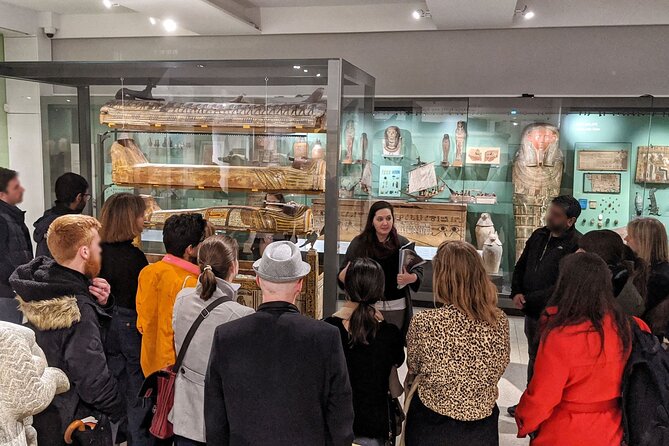
- A six-part route inside the Ashmolean: The tour moves from the Statue Gallery and Ashmolean Story Gallery through ancient Greek and Roman displays, the Hellenistic World, colonialism and repatriation, and the Egyptian Galleries.
- A small group capped at 12 people: This size should give you a better chance to hear the guide and take part in the conversation.
- The museum is treated as part of the subject: You examine not only the objects, but also the choices behind their collection, presentation, labels, replicas, and display cases.
- Human remains are discussed directly: The Egyptian Galleries provide a chance to consider the ethics of displaying mummies and other human remains.
- The tour is conducted in English: A mobile ticket is provided, and group discounts are available.
- Flexible cancellation, with a time limit: You can receive a full refund if you cancel at least 24 hours before the start time.
Starting at the Statue Gallery on Beaumont Street
You meet at the Statue Gallery near the Ashmolean’s main entrance, at Beaumont Street, Oxford OX1 2PH. The activity begins and ends at the museum, which keeps the plan simple if you are fitting it between other Oxford sights.
The opening five minutes are brief, but useful. This is where you meet the Uncomfortable Oxford guide and get oriented before moving into the museum. Since the group is limited to 12 people, the introduction should feel more personal than a large, flag-following tour.
I like this starting point because it puts the subject in front of you immediately. You are not beginning with a long speech outside the building. You are meeting beside art, in the place where the questions will be explored.
The museum is near public transportation, and most people can take part. Service animals are allowed. The activity is offered in English, so you should be comfortable following a discussion that includes historical, ethical, and artistic questions.
More Museums:
- Natural History Museum Tour – by Uncomfortable Oxford™
★ 4.5 · 17 reviews - Tower of London and Crown Jewels Exhibition Ticket
★ 4.5 · 6,677 reviews - Chelsea FC Stadium Tours and Museum
★ 5.0 · 1,908 reviews
Five minutes in the Ashmolean Story Gallery
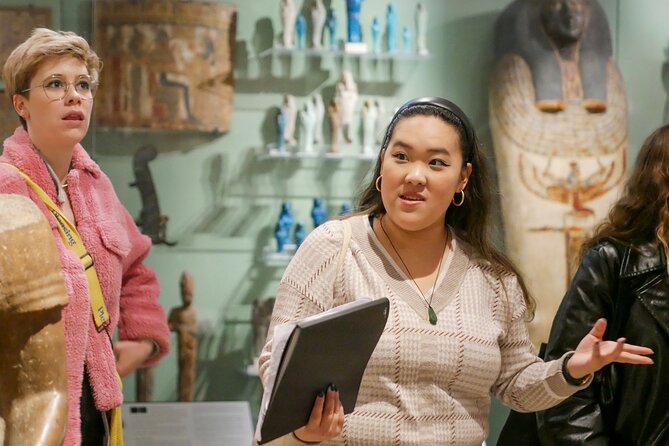
The next stop lasts about 10 minutes and introduces the museum itself. In the Ashmolean Story Gallery, the guide explains the origins of the institution and examines the legacy of early colonial collecting practices.
This is a strong choice for an opening subject because it changes how you look at every later gallery. Museums can appear neutral, as if objects simply arrived and found their natural home. This discussion asks you to consider the decisions, power structures, and collecting habits that shaped the collection.
The value here is not just a list of dates or founders. You are encouraged to think about the relationship between museums and empire, and about the difference between owning an object, studying it, and having a right to display it.
The short time allocation keeps the introduction moving. Still, 10 minutes cannot answer every question about the Ashmolean’s origins. If this topic interests you deeply, you may leave with more questions than answers. That is likely part of the point, but you should not expect a full institutional history in this section.
Fifteen minutes with Greek and Roman sculpture
The tour then moves to the Cask Gallery for about 15 minutes. Here the guide raises questions about the museum’s focus on Greek and Roman culture, enslavement practices, and the aesthetics of ancient sculpture.
This stop brings together ideas that are often separated. You may be used to seeing ancient statues discussed in terms of beauty, proportion, and influence on Western art. This conversation adds the people and systems behind that artistic tradition, including enslavement and the ways ancient societies are presented to modern audiences.
I find this part especially useful for anyone who has wondered why Greek and Roman art receives so much attention in major European museums. The tour does not ask you to stop appreciating the sculpture. Instead, it asks you to notice what can be lost when beauty becomes the only subject.
The word aesthetics matters here. A statue may be praised for its form while the social world around it receives little attention. You are invited to consider who decided what counted as beautiful, which stories received space, and how modern museum displays shape your response.
The drawback is that this discussion may challenge familiar ideas about classical art. That is a benefit for an open-minded visitor, but not everyone wants a museum visit to become a debate about cultural power and historical inequality. This is not a light commentary tour.
The Hellenistic World and the ethics of excavation
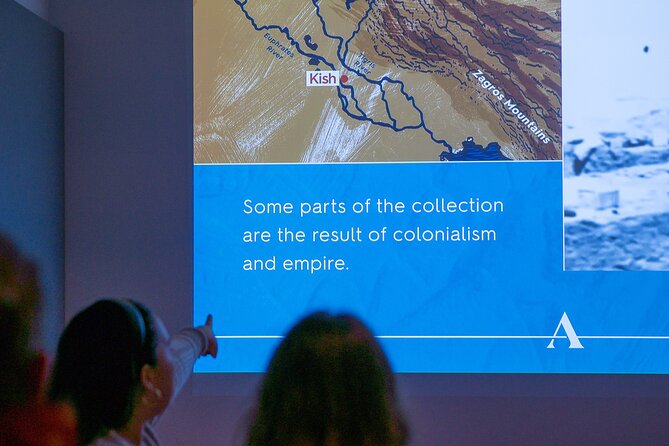
The Hellenistic World gallery receives about 15 minutes. The focus shifts to excavations, museum display, and replicas.
This section looks at what happens before an object reaches a case. Excavation is often presented as discovery, but the act of removing an object from the ground raises questions about ownership, permission, context, and the people who live near archaeological sites. A museum display can also make an object appear complete and self-explanatory, even when its original setting or purpose is uncertain.
Replicas add another useful question. If a copy looks convincing, does it serve the same purpose as an original? Can a replica help people understand an object without replacing the importance of the original? The guide uses the gallery to make you think about the difference between seeing an artifact and understanding its past.
I like this stop because it deals with the practical side of archaeology. You are not only looking at ancient pieces. You are considering how excavation, reconstruction, copying, and display affect the story you receive.
Fifteen minutes is enough to establish the main issues, but it is not enough to settle them. You will need to pay attention and keep the discussion moving. The small group helps here, since questions can be addressed without the long delays common in a large tour.
Something different for another day:
- Oxford University Walking Tour With University Alumni Guide
★ 5.0 · 6,905 reviews - 1.5-hour Oxford City and University Walking Tour
★ 4.5 · 1,383 reviews - Oxford Official University & City Tour
★ 5.0 · 1,134 reviews - City Sightseeing Oxford Hop-On Hop-Off Bus Tour
★ 4.5 · 1,042 reviews
Colonialism and repatriation in the museum’s own display
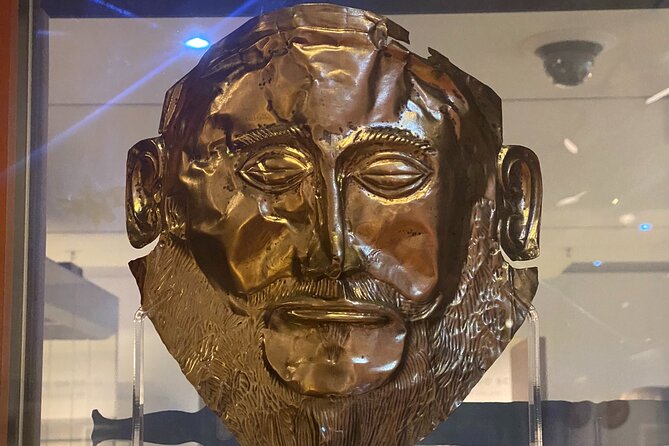
Another 15-minute stop examines a display on colonialism and repatriation designed by the Ashmolean itself. This is one of the tour’s most direct moments because the museum becomes both the setting and the subject.
Repatriation concerns the return of cultural objects to their places or communities of origin. The display gives you a chance to consider how the museum presents this issue, what language it uses, and how an institution responds to the history of its own collections.
That self-reflective angle is valuable. It is easy for a guide to criticize museums in general. It is more useful to look at the words, layout, and choices made by the museum you are standing inside.
You may find this section particularly helpful if you want to understand why collection ownership remains an active issue rather than a settled question. It also connects the early discussion of colonial collecting with the practical decisions museums face now.
Because the tour is discussion-led, your experience may depend partly on the questions raised by the group. One session could spend more time on a point that another group passes over. That flexibility is a strength if you enjoy conversation, but it means the experience is not a fixed script with identical detail at every turn.
Mummies and human remains in the Egyptian Galleries
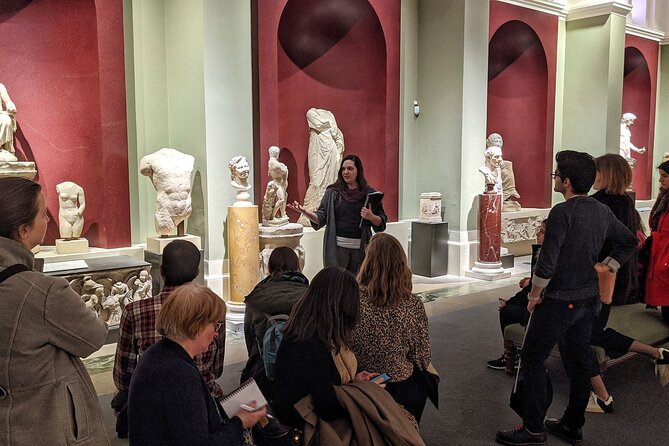
The final 15-minute stop takes place in the Egyptian Galleries. The subject is mummies and the ethics of displaying human remains.
This is a serious ending, and an appropriate one. Earlier stops ask who collected objects, how ancient art is judged, and how museums handle ownership. The Egyptian Galleries bring those questions close to the human body. A mummy is not only an archaeological object. It was once a person, and that fact changes the way you should think about viewing it behind glass.
The discussion can cover why human remains are displayed, what educational value a museum may claim, and what respect should look like in a gallery. These questions do not have easy answers. The tour gives you a framework for considering them rather than pretending that one simple rule fits every case.
I appreciate that the subject is included in a short museum tour. Many visitors pass through Egyptian galleries focused on age, preservation, and visual spectacle. This conversation asks you to slow down and think about dignity, consent, and the difference between curiosity and respectful study.
The topic may not suit every family or every visitor. If you prefer a cheerful art introduction, this final section could feel heavy. If you value direct discussion of difficult museum subjects, it may be the part you remember longest.
Why the small group changes the experience
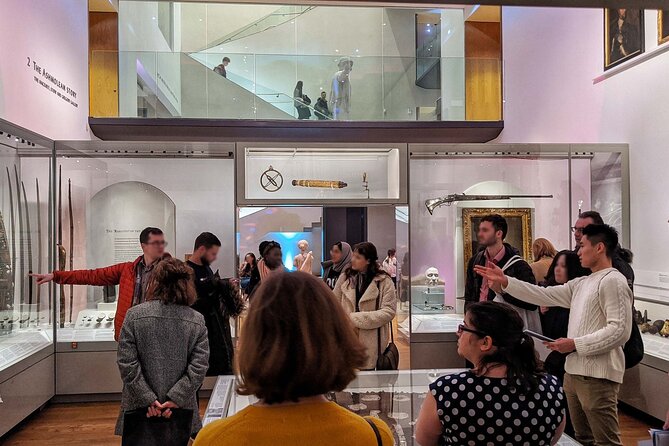
The maximum group size is 12 people. That matters more here than it would on a simple sightseeing walk because the tour depends on questions and exchange.
A large group often turns discussion into a one-way speech. With 12 or fewer people, you should have a better chance to hear the guide clearly and follow the reasoning from one gallery to the next. You may also feel more comfortable asking about a point that puzzles you.
The guide’s manner is another important part of the experience. The strongest praise has focused on an open, friendly approach, interesting information, and a beautiful presentation. That combination suggests a guide who can address difficult material without making the atmosphere hostile or overly formal.
Still, a small group does not guarantee a private tour. Other people’s interests will shape the pace, and you may spend more or less time on particular questions. Go in ready to listen as well as speak.
What you receive for about $96.02
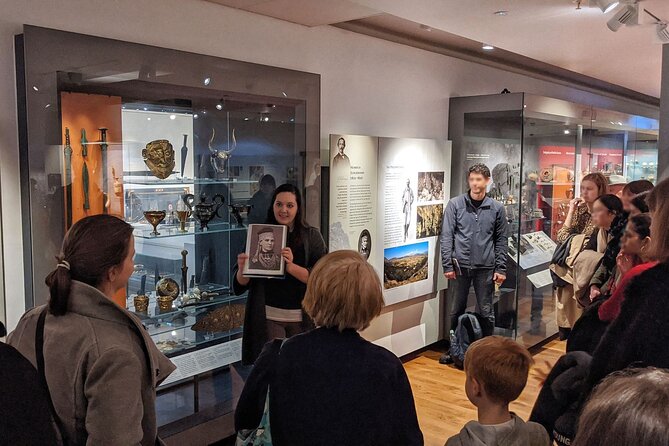
At roughly $96.02 per person, this is not a bargain if you measure value by minutes alone. The tour lasts about 75 minutes, and admission tickets for each museum stop are listed as free. You are paying mainly for the trained guide, the carefully chosen route, and the chance to discuss subjects that are easy to miss on your own.
The price is easier to justify if you already plan to visit the Ashmolean and want more than labels and room-by-room viewing. A good guide can change the way you see the whole museum, not just the six stopping points.
It is harder to justify if you want a broad survey of the Ashmolean’s collection. This is not designed to cover every major gallery, famous object, or period. Its value comes from a particular theme: the difficult questions behind collecting and display.
Group discounts may improve the cost for people booking together. Since the experience is in English, you should also consider how much you will gain from a discussion rather than a standard audio-style explanation.
Who should book this Ashmolean experience
I would recommend this tour to you if you enjoy museums that ask questions instead of simply presenting answers. It suits people interested in colonial history, archaeology, ancient art, museum ethics, and repatriation.
It is also a good fit if you have visited the Ashmolean before and want to see it through a new frame. Familiar galleries can feel different when you start asking who selected the objects and why they are presented in a particular way.
Students, educators, museum professionals, and visitors interested in responsible cultural tourism may find especially strong value here. The small group and discussion format make it more useful for people who want to think aloud and test their assumptions.
You may want to skip it if your time in Oxford is very short and you want to see as many objects as possible. You should also think twice if you prefer a purely celebratory art tour. This experience is intentionally challenging, and it does not treat the museum as a place beyond criticism.
Timing, tickets, and practical points
The activity lasts approximately 1 hour and 15 minutes. Plan to meet at the Statue Gallery near the main entrance, then return to the same meeting point at the end.
Confirmation is provided at booking, and the ticket is available on your mobile device. The tour is offered in English. It is near public transportation, service animals are allowed, and most people can participate.
Free cancellation is available when you cancel at least 24 hours before the local start time. Changes or cancellations inside that 24-hour window are not accepted for a refund.
The experience requires good weather and a minimum number of participants. If poor weather or low enrollment causes cancellation, you are offered another date or experience, or a full refund. That policy is worth noting even though most of the tour takes place indoors.
My verdict on the Ashmolean Museum Tour
Book it if you want the Ashmolean to be more than a collection of beautiful rooms. The route is short, focused, and built around questions that many standard museum visits leave untouched.
The strongest reasons to go are the small group, the guide’s friendly discussion style, and the clear progression from colonial collecting to ancient sculpture, excavation, repatriation, and human remains. The main weakness is the price for 75 minutes, especially when museum admission is free.
For a visitor who wants an easy introduction to Oxford’s art museums, I would choose a broader tour. For you, if the ethics of museums matter as much as the objects inside them, this is a worthwhile and unusually direct way to spend part of your Oxford visit.
FAQ
Where does the Ashmolean Museum Tour begin?
The tour begins at the Statue Gallery near the main entrance of the Ashmolean Museum, Beaumont Street, Oxford OX1 2PH, United Kingdom.
Where does the tour end?
The activity ends back at the meeting point at the Ashmolean Museum.
How long does the tour last?
The tour lasts approximately 1 hour and 15 minutes.
How many people can join the tour?
The maximum group size is 12 people.
What language is the tour offered in?
The tour is offered in English.
Is a museum admission ticket included?
The stops list admission tickets as free. The experience includes a guided tour through the specified Ashmolean galleries.
Is the tour near public transportation?
Yes. The Ashmolean Museum is near public transportation.
Are service animals allowed?
Yes, service animals are allowed.
Can I cancel for a full refund?
Yes. You can cancel for a full refund if you cancel at least 24 hours before the experience start time. Cancellations or changes made less than 24 hours before the start time are not accepted for a refund.
Just added around Oxford
- Cotswolds One Day Guided Cycle Tour – Private Groups★ 5.0 · 7 reviews
- Follow the Money Tour – by Uncomfortable Oxford™★ 5.0 · 7 reviews
- CS Lewis & Tolkien Tour with Magdalen Entry Public tour 13.45★ 5.0 · 8 reviews
- Oxford Scenic Cycle Tour- 2 persons minimum summer season★ 5.0 · 8 reviews
- Oxford Private Guided Walking Tour★ 4.5 · 8 reviews
- History of Medicine Tour – by Uncomfortable Oxford™★ 4.5 · 8 reviews
- Oxford: to Cotswolds (Half Day)★ 5.0 · 8 reviews
- Oxford Walking Tour – Discover its University and Traditions★ 4.0 · 9 reviews
Museums, compared.

Tower of London and Crown Jewels Exhibition Ticket
Read our review →

Official tickets: Moco Modern & Contemporary Art Museum
Read our review →
British Museum London Guided Tour Semi-Private 8ppl Max
Read our review →
The British Museum London – Exclusive Guided Museum Tour
Read our review →


Skip the Line: Liverpool Beatles Museum – The perfect tribute to the Beatles
Read our review →Browse the lists this tour appears in